Thinking About Spotify, Exclusivity, Call Her Daddy, and Joe Rogan
Spotify has made a couple of big announcements in the past week:
First, their second-biggest show, Call Her Daddy, ended exclusively rights1. While the show will still be a Spotify show, it will be widely distributed (though video will still be exclusive to Spotify).
Then, over the weekend, the same thing is happened with The Joe Rogan Experience (JRE). It will soon be available on other platforms, after being completely exclusive to Spotify for the past 3+ years.
JRE’s renewal was also apparently a massive deal monetarily2. It’s got me thinking a lot about podcasting and what’s in store for us.
Exclusivity is a Risk, Even for Giant Podcasts
Here’s what Ariel Shapiro said in her Hot Pod newsletter before the Rogan deal was announced (emphasis mine):
If Rogan goes, it would really be the final death knell for Spotify’s exclusivity experiment. It did work for Spotify in some ways. By snatching up the top podcasts and studios at the time, it lured podcast listeners away from Apple and forged new ones. And even now that it has fallen behind YouTube, it is still a go-to destination for podcasting.
I tend to agree with this analysis. When Spotify started doing exclusive deals, I more or less boycotted those shows — though perhaps boycott is a strong word. I, personally, feel podcasting is one of the few truly open mediums left, especially in 2018-2020. Plus, I listen to all of my podcasts in a single app, Overcast.
I even endure ads on Wondery shows in Overcast, even though I can get those ad-free in the Amazon Music app as a Prime member.
But it’s no secret that these moves did bring people to the platform. Spotify, one of the top 3 podcast apps, and it was eating Apple’s lunch for a while shortly after Rogan became exclusive.
So why this change? Well, there’s something else Shapiro points out:
But as Spotify fights for higher margins, it seems it has more to gain from getting the ad dollars that come from wider distribution than whatever less tangible platform benefit comes from exclusivity.
The main benefit of these shows being exclusive — bringing people to their platform — doesn’t outweigh the benefits of being everywhere and getting ad dollars. Especially since Spotify also owns Megaphone, one of the biggest dynamic ad platforms.
What does that mean for smaller podcasters like us?
The risk/reward of exclusivity is not worth it. If Spotify, one of the top 3 podcast apps, didn’t feel it worked for JRE or Call Her Daddy, then it surely won’t work for most others — not in the “all episodes are exclusive” sense, anyway.
Exclusivity Didn’t Work for YouTube Either
We actually saw the same lesson play out with YouTube Red. They brought some of the biggest YouTubers, like Rhett and Link, in to create YouTube Red-exclusive content…but they ended up scrapping that because it wasn’t worth the investment.
That content is now available to all users.
When I first saw Tom Webster speak back in 2018, he discussed the importance of being where your listeners listen. I’m still really, really bullish on that…and it seems Spotify had learned the same lesson (JRE was big on YouTube, and the clips still get millions of views).
Speaking of Tom Webster and Joe Rogan…
How is Joe Rogan so Popular?
The Spotify deal has also reignited discussions about why Joe Rogan is so popular. Tom Webster had, easily, the best analysis in a now deleted Thread:
I want you to think about WHY Rogan is popular. It isn’t because he’s a celebrity. Feeding people bugs on a reality show isn’t enough to make you good at podcasting. Rogan is popular because he is good at what we are supposed to be good at in podcasting: knowing your audience.
…When I see Rogan’s audience, I see a group of disenfranchised, young (mostly) men, who do not feel completely in control of the narrative of their own lives, and cannot shake the feeling that the system is rigged against them, because older guys like me continue to hang on to our jobs and aren’t sharing in the American dream with them.
…Rogan exposes them to the information they believe society keeps hidden so that they can make their own decisions. They don’t want conspiracy for the sake of conspiracy – they want a sense of agency in their own lives.
If you read the comments — an activity I generally don’t recommend — you’ll see hate directed at Webster because the commenters don’t like what he’s saying. Strong how can you say anything good about this person I so deeply hate vibes.
But not liking Joe Rogan doesn’t make Tom Webster wrong.
And don’t get me wrong — I don’t like Rogan, either. I thought his whole schtick about calling out comedians who steal jokes was lame and gimmicky3, and in my opinion, he’s only gotten worse.
Joe Rogan’s resume before (and during) his podcast was:
- Mediocre stand-up comedian
- Host of Fear Factor
- UFC announcer
- Minor TV and Movie roles
None of these things make you the top podcasters. In fact, the second most popular podcast on Spotify at the time of this writing, New Heights with Jason and Travis Kelce, is probably only there because of Taylor Swift, the most popular person in the world right now.
But again, what does this mean for us?
Here’s how Webster ends his thread:
This is the work. I’ve worked with literally some of the biggest shows in the world in radio and podcasting and this is the work. Narrow focus on HUMANS.
I mentioned that I have a problem with Rogan’s popularity. It’s not that his show is so popular. It’s that show number two isn’t even close. It’s that there is SUCH a wide gap between Rogan’s show and the rest of the field. It’s that he is such an outlier. All because he has found an audience that needs a home, and he gave them a home.
Please do the work
You don’t need to sell out your values, or push things you (probably) know aren’t true, or say things because that’s what people want to hear.
But you do need to find your audience. Don’t focus on money, or growth, or anything else. Serve human beings.
And do everything possible to reach them wherever they consume content.
- It’s already number one on Apple’s Comedy charts, and number two overall. ↩
- It was originally reported around $250M, but Spotify has claimed that’s not true. ↩
- Though, I guess it’s proof that he was dedicated to the truth at some point in his career. ↩
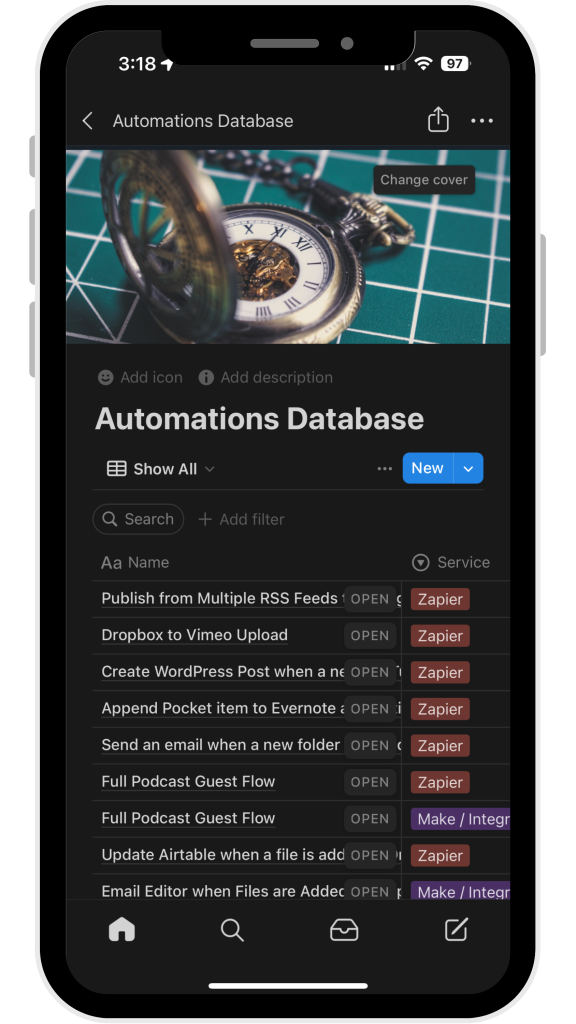
Here are some of the best automations for your podcast.
You want to free up your time but you don’t know what’s possible — so here’s 40+ automation templates to get you started.
Download them for free below!